


Summary
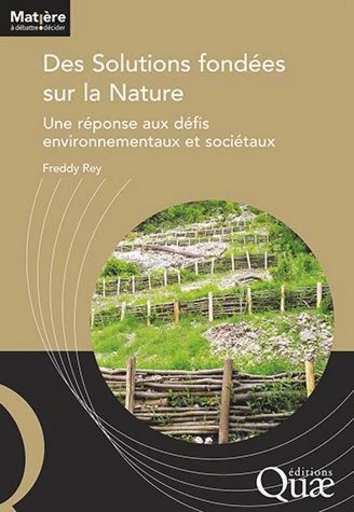
Since the early 2010s, the concept of Nature-based Solutions has been integrated into land development projects to reconcile environmental issues with societal needs. But the concept still raises many questions. How can we preserve our environment while supporting socio-economic development? How can we adapt to climate change without sacrificing a certain level of comfort?
The preservation or restoration of biodiversity is a prerequisite for the implementation of any initiative, whether it concerns natural risk mitigation, water supply security, economic and social development, food security, human health, or mitigation and adaptation to climate change. The author details the application of the Nature-based Solutions concept to these six major societal challenges, sharing initiatives as diverse as restoring wetlands to reduce flooding, reopening natural lands to control fires, installing vegetated swales to limit soil sealing and urban heat island effect, and diversifying crops to limit pesticides while preserving their economic profitability.
This book is aimed at decision-makers in charge of land planning. It will also be of interest to companies, researchers, teachers and students wishing better understanding this conciliatory approach involving a plurality of actors. "
Table of contents
Acknowledgements
Introduction
1 . The concept of Nature - based Solutions
Definition
Links with other concepts
Challenges to be met
Capitalizing on the co - benefits of Nature - based Solutions
2 . Reducing natural hazards
Water - related risks
Gravitational risks
Fire risks
Coastal risks
3 . Security of water supply
Securing water supplies
Securing water quality
4 . Economic and social development
Sustainable agriculture
Sustainable forestry
Sustainable mobility
Heat in the air
Air quality
Sustainable tourism
5 . Cross - cutting societal challenges
Food safety
Human health
Mitigating and adapting to climate change
6 . The players involved in implementing Nature - based Solutions
The chain of players
The role of research
The role of training
The role of engineering and business
The role of associations and citizens
The role of decision - makers
7 . Innovative action at the crossroads of several challenges
The virtues of multi - benefit approaches
The example of reunifying water cycles
Numerous Nature - based multi - benefit solutions
Governance dedicated to the multi - benefit approach
Reconciling environmental preservation and societal challenges
Conclusion
References