Présentation
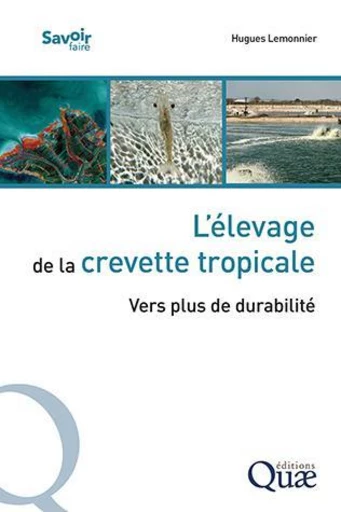
Avec un taux de croissance annuel de l’ordre de 5 % entre 2015 et 2026, la filière crevette fournit des produits qui sont très présents sur les étals, devenant un pilier de l’aquaculture. Ce secteur industriel s’étend et intensifie son activité sur les zones côtières, notamment tropicales.Cette dynamique de croissance, fondée sur des pratiques et des modes de production hérités des années 1980, pose pourtant de nombreux problèmes environnementaux, économiques et sociétaux, remettant en cause la durabilité de cette filière : émergence d’épizooties parmi les animaux ou encore, impacts significatifs sur les écosystèmes côtiers.Pour mieux comprendre les risques et défis actuels de la filière, l’auteur fait le point sur l’expérience acquise dans différentes régions du monde (Nouvelle-Calédonie, Indonésie, Vietnam) autour des liens entre crevetticulture et environnement. Il aborde la mise en place d’outils innovants pour une surveillance et une gestion durable des systèmes, la diversification des espèces élevées, l’intensification écologique des systèmes de production, le développement d’une aquaculture multitrophique intégrée, mais aussi la réhabilitation des bassins aquacoles abandonnés par les éleveurs suite aux crises successives rencontrées depuis les années 1990.Cet ouvrage s’adresse à l’ensemble des acteurs de la filière crevette : agents des administrations et de leurs services décentralisés, collectivités territoriales, bureaux d’études, ainsi qu’aux professionnels du secteur — de la production à l’agro-industrie. Il constitue également une ressource précieuse pour les étudiants et toute personne souhaitant appréhender les enjeux du secteur et les solutions envisagées pour promouvoir une crevetticulture plus durable.
Sommaire
Remerciements
Introduction
1. La crevetticulture
Contexte général
La production mondiale de la crevette
Le cycle de production
Les techniques de grossissement
Les principaux facteurs affectant le développement de la filière
La Nouvelle-Calédonie : un exemple de développement
2. Trajectoires de l’agrosystème
Dynamique biogéochimique
Évolution des facteurs abiotiques de stress pendant un élevage
Dynamique sédimentaire sur le long terme
Étude d’une trajectoire conduisant à une biodisponibilité des métaux
Diversité et dynamique du phytoplancton au cours d’un élevage
Les épizooties
Conclusions
3. Environnement littoral
Introduction
Les principaux impacts
La Nouvelle-Calédonie : vers une meilleure prise en compte de l’environnement ?
4. Cocultures et aquaculture multitrophique intégrée
Contexte
Étude de cas : la Nouvelle-Calédonie
Perspectives, limites et défis
5. Développement d’outils pour une gestion durable
Contexte
Les données complexes et massives collectées par les fermiers en Nouvelle-Calédonie
Le cas des données satellitaires
Conclusions et perspectives
6. Réhabilitation des sites de production abandonnés
Contexte
Étude de cas : l’estuaire de la Perancak
Restauration/réhabilitation des mangroves
Conclusions
Conclusions
Références bibliographiques