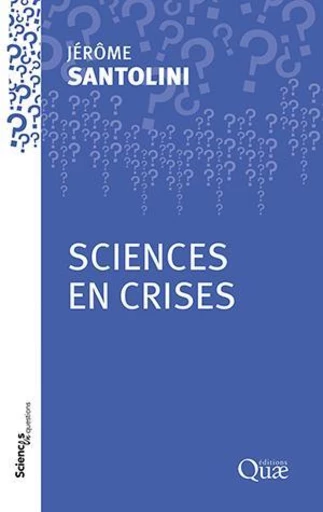
Présentation
Alors que les crises se multiplient, le rôle des chercheuses et des chercheurs évolue. Nombre d’entre eux sortent aujourd’hui de leur réserve académique pour investir l’espace public, selon des formes d’engagement inédites, pouvant aller jusqu’à la désobéissance civile.
Cet ouvrage explore ce tournant à travers deux angles : une analyse des nouvelles relations entre sciences et politique, et le parcours d’un chercheur engagé dans diverses arènes publiques — des mobilisations contre l’usage du plastique dans les cantines scolaires à l’échec de l’expertise sur les additifs nitrés, en passant par la politisation des débats sur les polluants éternels et l’émergence de collectifs comme Scientifiques en rébellion.
Face à ces transformations, le livre interroge notre manière de considérer le monde, souvent réduit à un décor inanimé et/ou à un ensemble de ressources à exploiter. Il met en lumière certaines tensions des sciences contemporaines : malgré des savoirs toujours plus précis et performants, ceux-ci se révèlent fragmentés, standardisés et souvent déconnectés de l’expérience vécue et des préoccupations collectives. Devenus inaudibles et illisibles, ils ne permettent plus de construire un vivre-ensemble digne et durable. Les crises ne sont pourtant pas une fatalité. Elles offrent l’opportunité de questionner la façon dont nous produisons nos connaissances, et de repenser nos expériences et savoirs pour nous relier au monde que nous habitons, tant qu’il est encore temps.
Sommaire
Préface
Introduction
1. Traces de l’engagement
1.1. Sciences et sociétés : une très vieille histoire
1.2. Une situation inédite
1.3. Engagement scientifique et reconfiguration de l'espace public
1.4. Reconfiguration des rapports entre sciences et politiques
2. Trajectoires
2.1. Père, citoyen et scientifique dans l’arène publique
2.2. Le naufrage de l’expertise publique dans l’arène réglementaire
2.3. Influencer les parlementaires dans l’arène politique
2.4. La désobéissance civile pour exposer les savoirs scientifiques dans l’arène médiatique
2.5. Pourquoi et pour quoi s’engager ?
3. Crises
3.1. Un monde perdu
3.2. Omelas
3.3. Crise des savoirs et crise des sciences
3.4. Une crise épistémique, sociale, politique
3.5. Rapport à la crise
4. Transformations
4.1. Comment les crises transforment les sciences
4.2. Échec de l’institution scientifique
4.3. Kairos : une autre science est possible
4.4. Commun, communs, et faire communs
4.5. Shevek : rouvrir les imaginations
Discussion
Références bibliographiques
Liste des abréviations