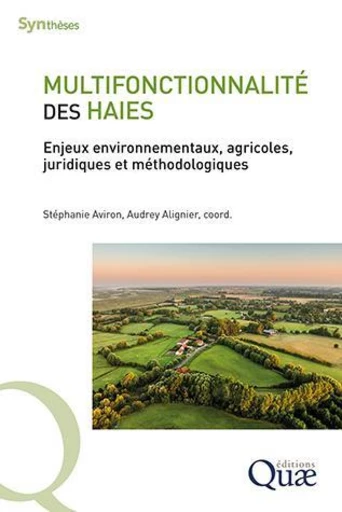
Within rural areas, hedgerows fulfil a wide range of functions: physical boundaries, productive elements, habitats for biodiversity, planning tools, and more. They meet societal expectations that are constantly evolving. At the intersection of the multiple expectations and uses of the various local stakeholders, hedgerows can be considered a common good that needs to be preserved—and even restored and developed—in response to the challenges posed by climate change, biodiversity loss, and agricultural sustainability.
However, do hedgerows actually support multifunctionality? Under what conditions does this multifunctionality emerge? How can we promote the adoption of management practices that support this multifunctionality, both at the farm and territorial levels? To what extent can current regulatory tools and incentive schemes contribute to supporting the protection, restoration, or replanting of hedgerows? Finally, how can the conditions of hedgerows and their multiple functions be monitored at different scales?
This interdisciplinary work provides an overview of current scientific knowledge and reflects the diversity of emerging advances—both conceptual and methodological—on hedgerows and the multifunctionality they can support at various scales. It is intended for scientists and engineers, as well as for higher education and agricultural institutions.
Read the prefaces (Marc Deconchat and Bénédicte Augeard)
See the supplementary bibliography for this book (in French)