Présentation
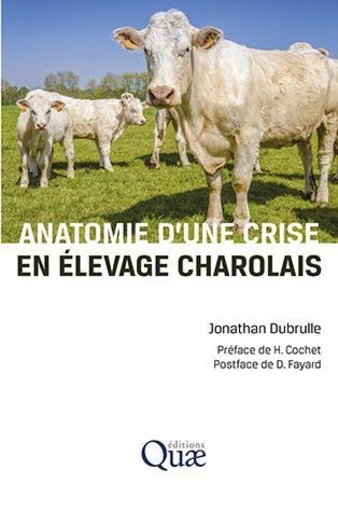
Au cœur des années 2020, les producteurs de bovins allaitants du Bassin charolais affrontent une crise multidimensionnelle. Pourtant acteurs clés de la préservation des paysages, de la biodiversité et du stockage de carbone, ces éleveurs voient leur modèle économique vaciller. Leurs unités de production dégagent en effet de très faibles montants de valeur ajoutée rendant le revenu agricole extrêmement dépendant des soutiens publics. Cette précarité économique s’aggrave sous l’effet de pressions socio-environnementales qui érodent le sens même de leur métier : vulnérabilité accrue face au changement climatique, conditions de travail éprouvantes, et montée des critiques sur la consommation de viande. Toutefois, ces difficultés n’ont rien de conjoncturel. Elles s’enracinent dans une logique d’industrialisation des filières et de libéralisation des politiques agricoles, où l’augmentation de la taille des cheptels n’a pas rimé avec création de valeur.
À travers une enquête menée en Saône-et-Loire et dans la Nièvre, cet ouvrage propose une analyse de cette crise et examine les conditions nécessaires pour en sortir, en explorant les tentatives de changement, qu’elles soient individuelles ou collectives.
L’ouvrage s’adresse à la communauté scientifique, aux professionnels de la filière viande bovine, ainsi qu’à tous les acteurs concernés par le maintien de l’élevage sur les territoires.
Lire la préface d'Hubert Cochet, Professeur d’agriculture comparée AgroParisTech
Sommaire
Préface d’Hubert Cochet (professeur d’Agriculture comparée à AgroParisTech)
Introduction
Derrière une race et des paysages emblématiques, une production en crise
Faire de cette grave crise un objet d’étude : modus operandi
Lire la crise du système agraire charolais
Partie 1. Aux origines de la crise, des années 1950 à nos jours
Chapitre 1. De la polyculture-polyélevage au « moule à veau »
Une révolution agricole en devenir, de la fin du xviiie siècle au milieu du xixe
Diminution de la part de la polyculture-élevage et spécialisation précoce vers l’élevage bovin allaitant entre les années 1850 et 1950
Des systèmes de production relativement diversifiés où la majorité des bovins part maigre (1950-1960)
Du châtron au broutard (1960-1980)
Tout miser sur le broutard (1980-2000)
Des broutards préparés à l’italienne (de 2000 à nos jours
Conclusion
Chapitre 2. Du piécé au minerai, la filière viande bovine s’industrialise
Du piécé au steak haché : vers une consommation de masse
La viande devient un produit « fordiste »
Des intermédiaires sommés de se regrouper
Conclusion
Chapitre 3. Soixante-dix ans de course aux vêlages
Une première croissance du nombre de vaches par travailleur (1950-1960)
Un important raccourcissement du processus de production (1960-1980)
Poursuite de l’accroissement du nombre de vaches à la reproduction et alourdissement d’une partie des produits (1980-2000)
Dépasser la pointe de travail limitante des vêlages (de 2000 à nos jours)
Soixante-dix ans d’accroissement du nombre de vaches par travailleur : une illustration à partir du cas de l’Autunois et du Bazois
Conclusion
Chapitre 4. Une hausse des volumes qui s’est faite au détriment de la valeur ajoutée
Un rapport de prix très favorable qui incite à accroître la production (1950-1972)
Les débuts d’une crise marquée par l’érosion de la valeur ajoutée (1972-1992)
La valeur ajoutée nette par travailleur devient négative (1992 à nos jours)
Conclusion
Conclusion de la première partie
Partie 2. Une crise profonde
Chapitre 5. Quand le travail ne paye plus
Quatre types d’exploitations ayant maximisé le nombre de vêlages par unité de travail
D’importantes difficultés économiques
Conclusion
Chapitre 6. L’humain et la nature, victimes de la course aux vêlages
L’élevage bovin allaitant à la fois responsable et victime de préjudices environnementaux
Une crise sociale silencieuse, mais bien réelle
Conclusion
Chapitre 7. Le crépuscule ?
Des politiques agricoles et de marché qui s’écartent progressivement du soutien à la course aux vêlages
Une décapitalisation récente et conséquente
Une course aux vêlages qui se heurte à des limites techniques, organisationnelles et économiques
Conclusion
Conclusion de la deuxième partie
Partie 3. Quelles voies – ou voix – pour sortir de la crise ?
Chapitre 8. S’extraire du « moule à veau »
Engraisser tout ou partie des bovins nés sur l’exploitation
Démarrer une seconde production animale ou végétale
Tirer une meilleure valorisation de bovins vendus maigres
Des résultats en demi-teinte
Conclusion
Chapitre 9. S’unir pour agir
Répondre à la demande locale
S’orienter vers un marché de niche
Patrimonialiser l’élevage bovin allaitant
Conclusion
Chapitre 10. Ouvrir le champ des possibles
Renouer avec les grands principes de l’agroécologie
Réaffirmer la place du collectif au sein de filières et de réseaux à taille humaine
Créer les conditions politiques d’un changement de paradigme
Conclusion
Conclusion générale
Malgré la hausse du prix des bovins, l’élevage charolais traverse une crise économique structurelle
La crise de l’élevage charolais n’est pas qu’économique, elle est plurifactorielle
Des issues à la crise qui se heurtent à de nombreux verrouillages sociotechniques
Quel avenir pour l’élevage charolais ?
Postface de Dominique Fayard (docteure en histoire, chercheuse associée au Laboratoire d’études rurales à l’université Lumière Lyon 2)
Bibliographie
Liste des abréviations
Remerciements