Whilst women’s representation in sciences is on the rise, this increase is not of the same scope across all academic fields, such as mathematics or computer science. In addition, the proportion of women decreases at higher levels of the academic hierarchy.
The persistence of these disparities and inequalities can be explained by the strength of stereotypes and ideological positions maintaining men and women in different and hierarchical social roles. These anchored unconscious stereotypes and gendered representations convey biases that can creep into evaluation processes, be it regarding careers or research projects, and they can also determine and guide scientific approaches.
Given the complexity of the phenomena leading to the (re)production of inequalities, what measures can be enforced? And how can we ensure their efficiency for the ecosystem as a whole?
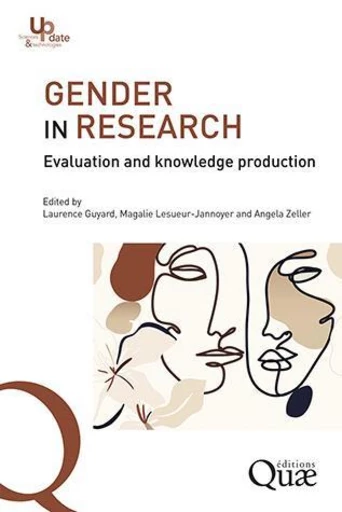
This book—thought as the extension of the Gender in Research colloquium held in December 2020—brings together scientists and funding agencies to address these questions and provide answers. Drawing on a variety of perspectives, depending on whether they emanate from scientists or funders, the contributions offer analyses of different kinds, yet all grounded in a reflexive endeavour.
This diversity allows to reaffirm that equality is a matter for all stakeholders in the research ecosystem, and their ability to engage in dialogue and collaborate is crucial to guarantee the coherence and efficiency of their actions.
This book is intended for all the stakeholders involved in the conduct of research and/or its evaluation, regardless of the scientific discipline.
This Print On Demand book will be sent within 1 to 2 weeks (metropolitan France) and in a separate package if you order another paperback book.
Ce titre est également disponible en français sur notre site : / This book is also available in French on our website :
Le genre en recherche