Présentation
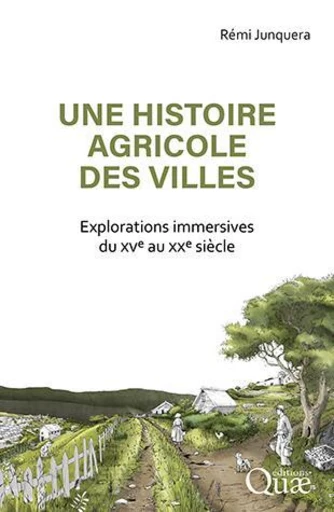
Depuis leurs origines, villes et agricultures évoluent en étroite interdépendance, façonnant leurs formes et leurs fonctions, et révélant une histoire commune. Cet ouvrage propose d’explorer les relations entre ville, architecture et agriculture depuis le Moyen Âge jusqu’à la fin du
XXe siècle. Il s’appuie sur l’étude des multiples interactions entre villes et campagnes, ainsi que des différentes typologies d’espaces cultivés en milieu urbain. Il met en lumière les grandes transformations et les évolutions majeures de ces relations, qu’elles soient alimentaires, sociales, économiques ou environnementales. Ce livre invite également le lecteur à une immersion sensible dans les ambiances urbaines à travers les siècles. En adoptant cette perspective historique, l’ouvrage apporte une profondeur spatiale et temporelle à ce que l’on nomme aujourd’hui les « agricultures urbaines ». Il vise à nourrir la réflexion des chercheurs, des praticiens, des étudiants et des lecteurs intéressés par ce sujet sur la nécessité de renouer des liens solides entre les villes et leurs agricultures de proximité. Cet éclairage sur les permanences et les mutations historiques des pratiques agricoles intra et périurbaines constitue un appui essentiel pour inspirer et transformer nos territoires urbains contemporains.
Cet ouvrage en impression à la demande sera envoyé sous 1 à 2 semaines environ (France métropolitaine) et dans un colis séparé en cas de commande avec un autre livre papier.
Sommaire
Remerciements
Introduction
Rupture et réconciliation
L’histoire pour redonner du sens
Explorations immersives
Guide de voyage
1. Les villes agricoles du Moyen Âge à la Renaissance (XVe-XVIe siècles)
La campagne lyonnaise et l’horizon des remparts
Des champs ruraux aux champs urbains
Les jardins urbains enclos
Dans les potagers des maisons de ville
L’apport alimentaire et économique du potager
Le jardin des sens
Détour par l’abbaye imaginaire de Saint-Gall
Point d’étape
2. Les villes et leurs ceintures maraîchères du Grand Siècle aux Lumières (XVIIe-XVIIIe siècles)
La ceinture maraîchère de Paris
Les ambiances des rues et des marchés
La nécessité des maraîchers-éboueurs
Les expérimentations agricoles dans les jardins des hôtels aristocratiques
L’artificialisation et la maîtrise de la nature
Les fonctions alimentaires et économiques du jardin bourgeois
Détour par le potager du Roi à Versailles
Point d’étape
3. Les premières distanciations durant la Révolution industrielle (XIXe siècle)
Les marchés urbains et la présence animale
L’avènement du maraîcher-vidangeur
La villégiature et les parcs urbains
Dans les quartiers industriels, où l’on « habite l’usine »
Dans les jardins ouvriers
Détour par la théorie des cités-jardins d’Howard
Point d’étape
4. Les ruptures entre les villes et les agricultures (XXe siècle)
L’urbanisation des campagnes lyonnaises durant l’entre-deux-guerres
Habitations à bon marché et jardins ouvriers
Cultiver pour survivre durant la Seconde Guerre mondiale
Les Trente Glorieuses ou la rupture villes-agricultures
Les grands ensembles et leur proximité avec les agricultures
Détour par le Village radieux du Corbusier
Point d’étape
Conclusion
Les valeurs alimentaires, économiques et sociales
Les valeurs sensibles et imaginaires
De la rupture au renouveau
Références bibliographiques
Iconographie